
Check Martin County's Owner of Record
Treat any owner listing as a dated snapshot, not a permanent label. The Assessor links the assessment owner to a parcel card through Elevate. Auditor detail pages may differ. They can carry Deeded Owner, Owner, Tax Bill, or Transfer Owner instead. Each label comes from a distinct county process with its own date. Copy the label exactly before judging whether it matches the latest recorded deed.
| Owner name | Assessment or deeded-owner name as displayed |
|---|---|
| Mailing address | Destination used for notices; not proof of where the owner lives |
| Situs | Physical property address |
| Transfer date | Date tied to a transfer or owner field when the roll supplies one |
| Deed reference | Instrument or book and page used to confirm the conveyance |
| Parcel ID | Tax and GIS key that ties the card to the tract |
The Auditor's records vary from parcel to parcel. One card shows a Deeded Owner dated January 28, 2026. Another pairs an Owner date with separate Tax Bill and Transfer Owner roles. These samples describe the field structure, not a rule every parcel follows, and a current owner is never the same thing as an occupant.
Verify the Martin County Owner Date
The date beside an owner field matters because Martin County runs two clocks. Real property is assessed as of January 1 each year. The Treasurer says bills go to the owner of record as of January 1 of the prior year. A deed accepted later may appear at the Recorder before a tax name changes.
This local lag explains why a current owner search can return more than one plausible name. Keep the assessment year, payable year, transfer date, and recording date distinct. The newest recorded deed is the stronger current clue when the legal description matches, but official verification still comes from the Recorder.
Watch the lag. A Martin County roll can trail a recent sale. Compare its date with the newest recorded deed before naming the current owner.
Confirm Martin County's Current Owner
Confirmation is a quick present-tense check. It does not mean rebuilding the property's entire chain of title; just take the dated roll name and compare it against one latest deed for the same tract.
- Open Martin County Elevate by address or parcel ID and save the owner label, parcel ID, and situs.
- Check the Auditor detail for its dated Deeded Owner, Owner, Tax Bill, and Transfer Owner fields.
- Use DoxPop to find the newest deed with the displayed owner as grantee. Match the legal description and recording date.
- Ask the Recorder for an official or certified copy if the result affects a purchase, estate, lien, or boundary decision.
- Owner of record
- The party named by the applicable official ownership or assessment record.
- Assessment roll
- The county list that ties parcels and owners to valuation as of its assessment cycle.
- Situs address
- The physical property location, which can differ from the mailing address.
- Recording lag
- The period before a new transfer appears across every county system.
Read Martin County Owner Roles Separately
Each role label carries its own meaning. Deeded Owner points to a party tied to a posted deed transfer. Transfer Owner can serve as a workflow clue. Tax Bill names the party attached to that year's tax administration, while Owner is a broad label whose meaning depends on the detail page. Never flatten these roles into a single name without their dates. When a transfer or tax role stays unclear, the Martin County Auditor office page is the source to use.
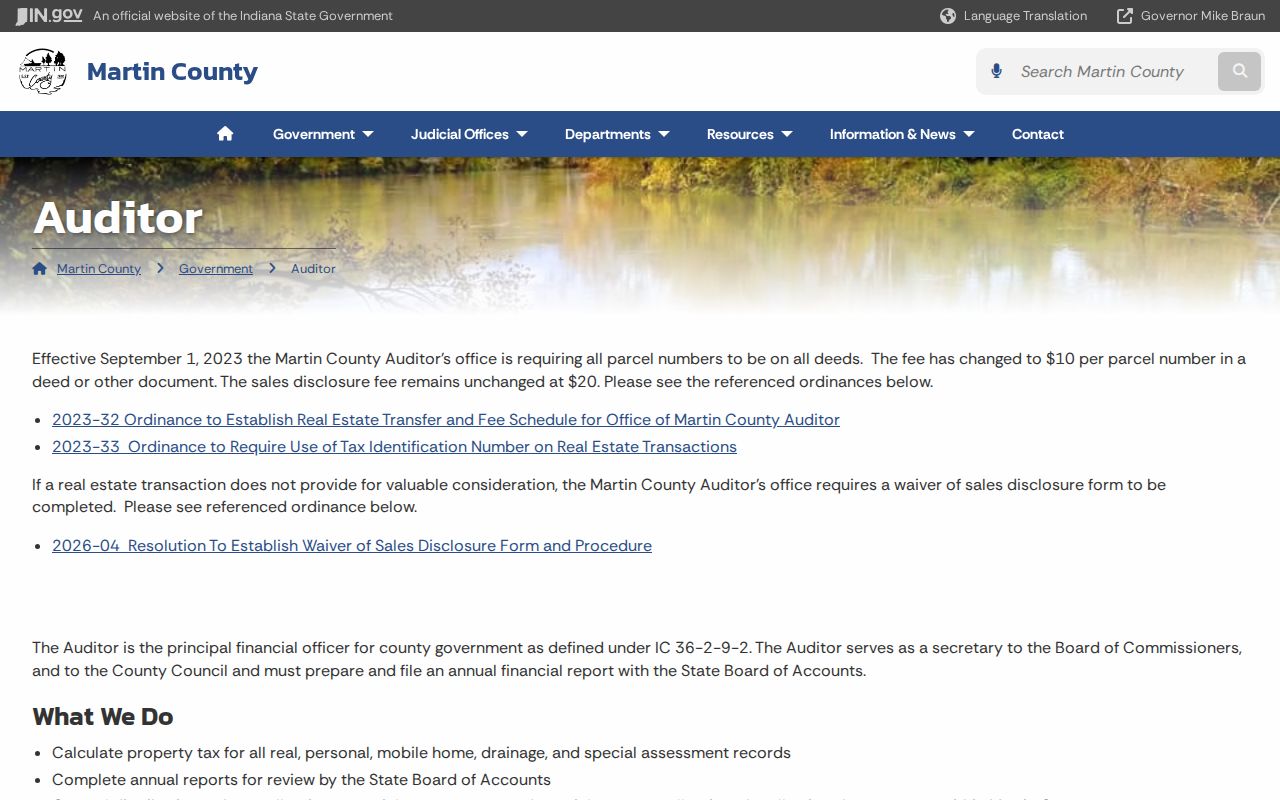
The Auditor also resolves questions about split or combined parcels and can explain which roll year has posted.
Compare Martin County Owner Addresses
A mailing address tells the county where to send notice. It might be a post office box, an entity office, or another property. It might also be an address outside Martin County. The situs, by contrast, is the land's physical location. Neither field alone says where a person actually lives.
A local Auditor sample sharpens the point. Its legal description reads "1972 Liberty Shaded Estates Lot 11." Meanwhile, the location display says "548 Shaded Estates - Lot 11." Search both forms. Let the parcel ID and legal description control. This quirk is specific to Martin County records rather than a generic address rule.
Check Martin County Entity Ownership
The current owner may be an LLC, corporation, trust, estate, land bank, or government body. Preserve the exact name and its role. Indiana INBiz can confirm an entity filing and registered agent. It proves nothing about parcel title, though. The recorded deed remains the key ownership instrument.
A trustee name does not reveal every trust beneficiary. An estate label may point to a probate order or a personal representative's deed. Public parcels can show an institutional owner with scant sale data. Ask the Assessor or Recorder whenever the card runs thin.
Capture the Martin County Parcel Card
A complete owner snapshot includes the parcel number, county, township or district, and property address. It also lists the owner name and mailing address, transfer date, and sale price when published. Add the assessment year, land and improvement values, and property class. Indiana's DLGF model card documents those field families. Actual Martin County values stay parcel-specific. The Martin County Assessor page identifies the office responsible for cards. It also covers assessments, sales data, and GIS.
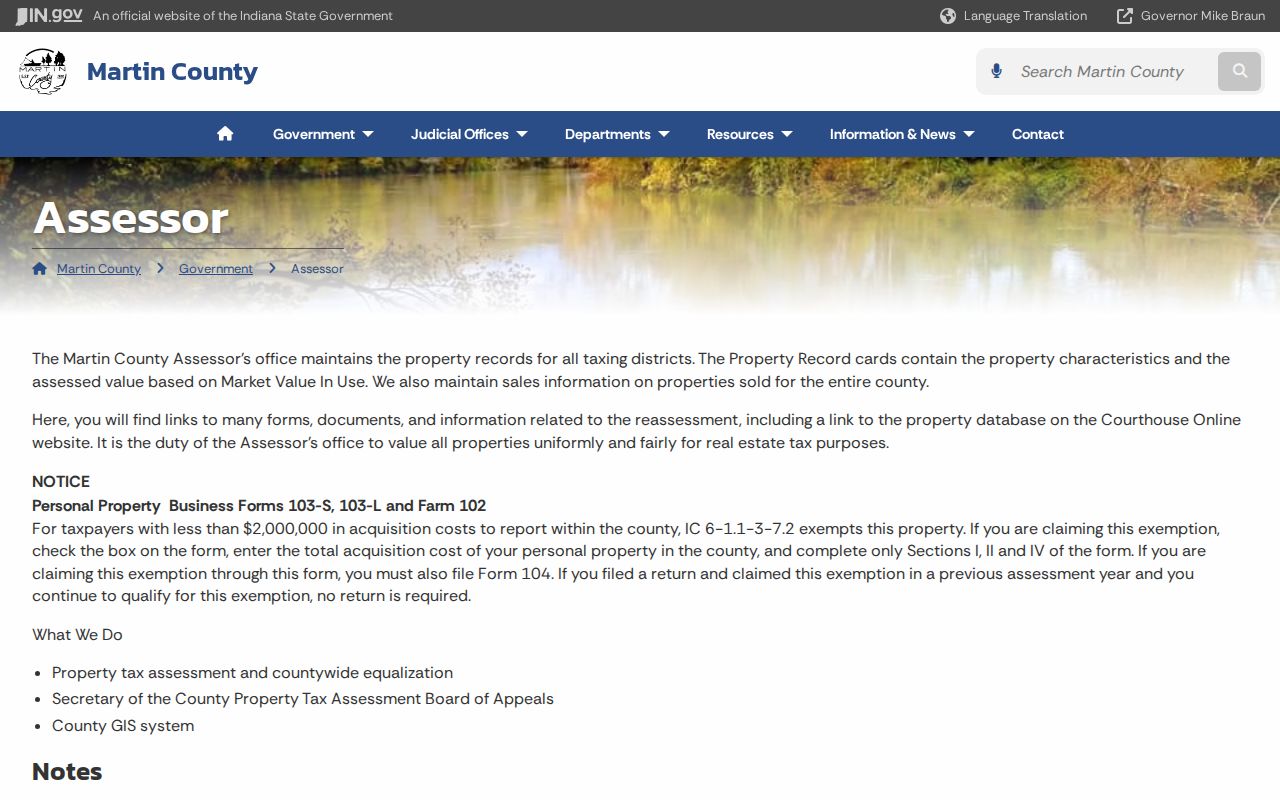
Save the query date along with the card. That context lets a later reader judge whether the owner field might be stale.
Ask Martin County About Conflicts
When portals disagree, take the question to an office. The Assessor handles property record cards and assessment ownership. The Auditor manages transfers and tax administration. The Recorder preserves title-affecting documents. All three sit at the Martin County government address in Shoals and keep weekday hours from 8 a.m. to 4 p.m.
A written APRA request should name the parcel, address, record type, and date span. Request the current card, the transfer notation, and the deed reference. Indiana APRA generally requires acknowledgment within 24 hours for an in-person or phone request. Mail, email, or fax allows seven calendar days. Production then takes a reasonable time.
Note: For a split or combination within the last two years, the Auditor's stated fallback is the owner's last name.
Use Martin County Owner Data Lawfully
A mailing address on a public tax roll can help with a lawful property inquiry. That does not give anyone permission to intrude. Indiana's Address Confidentiality Program gives qualifying survivors substitute addresses. Never try to reverse a protected address through parcel, voter, court, or other data.
An owner of record lookup is not a title search. It cannot prove who actually occupies a property. For the wider address-to-owner route, see who owns property in Martin County. When legal ownership is disputed, rely on an official deed from the recorder and qualified help.
Respect the record. Use Martin County current owner information for lawful property diligence. Never use it to stalk, harass, target, or expose a protected person.